


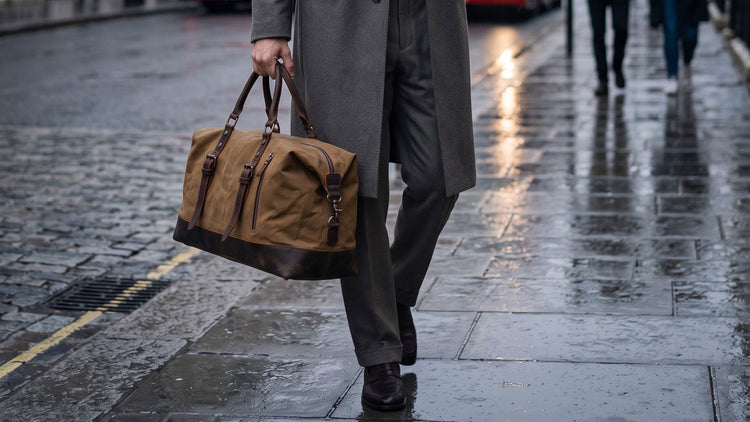
Wether & Hide designs and sells bags for the British weather. The name says it: wether is the old English word for weather, and hide is the hide that becomes leather. The bags combine the two materials the British have spent centuries getting right. Waxed canvas shrugs off rain. Full-grain leather takes on character with use. Every bag is named for a British place, and every bag is built to handle a wet walk to the station and a weekend away with equal ease.
Why Wether & Hide exists
We started Wether & Hide in London in 2016, after years of watching good bags fail in British weather. The leather ones soaked through on the walk from the platform. The canvas ones sagged after a season. The technical ones looked like they had come from a climbing shop rather than a train. None of them had been designed for the way people in this country actually carry things, which is a laptop to the office, a packed lunch, a book, and the rain that is almost always on the way.
Our answer was to pair waxed canvas and full-grain leather in one bag, sized for a laptop and a commute, and to name each one after somewhere on the British map rather than somewhere on a fashion catwalk. You can see the whole range across our backpacks, messengers, holdalls, crossbody bags, weekenders and leather accessories.
The name: weather and hide
The two halves of the name are the two halves of every bag we make. Wether, the old English form of weather, is the waxed canvas: the shell that handles rain, sleet, snow and the wet seat on the bus. Hide is the full-grain leather that the waxed canvas covers: the handles, the strap, the trim where your hand lands, the bits that wear in instead of wearing out. A waxed canvas bag with leather trim is more useful than either material on its own, and that is the whole point of the brand.
Waxed canvas and full-grain leather
Waxed canvas has been British rainwear for longer than any of us have been around. The wax is worked into the weave rather than coated on top, which is why the cloth softens with use instead of peeling off. Full-grain leather is the strongest cut of hide available, and it darkens, scuffs and softens over years rather than wearing through. We use the canvas where the rain hits and the leather where your hand lands. Both materials are covered in our waxed canvas care guide and full-grain leather care guide, which walk through the small routines that keep the bags doing their job for years.
Bags named for the British map
Every bag in the range takes its name from somewhere we thought the bag belonged. The rucksacks take their names from the hills and dales: the Lakes, the Dales, the Peak District, Snowdonia, Exmoor, Brecon. The messengers read like a London map: Bloomsbury, Holborn, Soho, Temple, Marylebone, Shoreditch, Bermondsey, Camden, Hackney, Bow. The holdalls name themselves after the moors and small towns they were imagined against: Dartmoor, Malvern, Penrith, Kendal, Fenwick, Ashdown. The washbags pick up villages: Hampstead, Chelsea. A bag called the Thames should carry you along the river. A bag called Dartmoor should not embarrass you on the platform at Okehampton. The place names are not marketing. They are reminders of the kind of weather and the kind of use the bag was designed for.
How the bags are designed and made
We design the bags in London, at our studio on Dunbridge Street, and we work with a partner workshop on the construction side. Every bag leaves the workshop waxed, the leather is full-grain throughout, the stitching is double at the seams that carry weight, and the hardware is metal rather than plastic. We design each style around a specific use: a specific commute, a specific weekend, a specific shape of bag. When a customer tells us a strap sits wrong or a pocket should sit somewhere else, the next batch of that style changes. We are not a heritage brand with a hundred years of history behind us. We are a brand that listens to the people carrying the bags.
What our bags will and will not do
We would rather tell you what the bags will not do than oversell what they will. Waxed canvas is water resistant, not waterproof. A shower, a wet seat and a day of light rain will bead and run off. Standing water and hours of steady rain will eventually push through, and the re-wax is what fixes that. Full-grain leather marks and scratches, and on a crazy-horse hide those marks are the point rather than a flaw. The hardware is solid metal, but it will mark if you scrape it. The bags are not fashion items and they are not heirloom items. They are workhorse bags that age into the life you put them through. The longer reading on the materials is in our canvas, cotton and nylon explained guide and our waxed canvas versus leather guide.
About us FAQs
Where are the bags made?
We design the bags in London and we work with a partner workshop on the construction side. We choose the workshop for the quality of the stitching and the consistency of the waxing rather than for a country-of-origin story. The honest answer is that what matters most is the materials and the build, and both are what we would want on our own bag.
What does waxed canvas mean?
It means cotton canvas with wax worked into the weave, which makes the cloth shed rain without a coating that can peel off. The wax wears thinnest where you touch the bag most, which is why a yearly re-wax keeps the bag doing its job. The full routine is in our waxed canvas care guide.
Why British place names?
The place names are not marketing. They are reminders of where the bag was designed to be used: the Lakes for a rucksack that should handle a wet weekend, the Thames for a crossbody that should sit on a London commute, Dartmoor for a holdall that should travel well on a small-town platform. If a name does not fit the bag, the bag goes back to the drawing board.
Is everything full-grain leather?
Where the bag uses leather, yes. The trim, the handles, the strap ends, the feet: full-grain throughout. Some styles use more leather than others. The cylinder bag is full-grain leather without canvas, and most of the other styles are waxed canvas with full-grain leather trim.
How do I get in touch?
By email at wetherandhide@gmail.com, by phone on +44 7555 483 025, or through our contact form. We aim to reply within a working day. The studio is at 34 Dunbridge Street, London, open Monday to Saturday 9 to 10 and Sunday 10 to 6.
The longer reading sits in the Wether & Hide journal: how to choose, how to pack, how the materials hold up.